
From Canvas to Code: How Interdisciplinary Art and Tech Training Drives Global Innovation
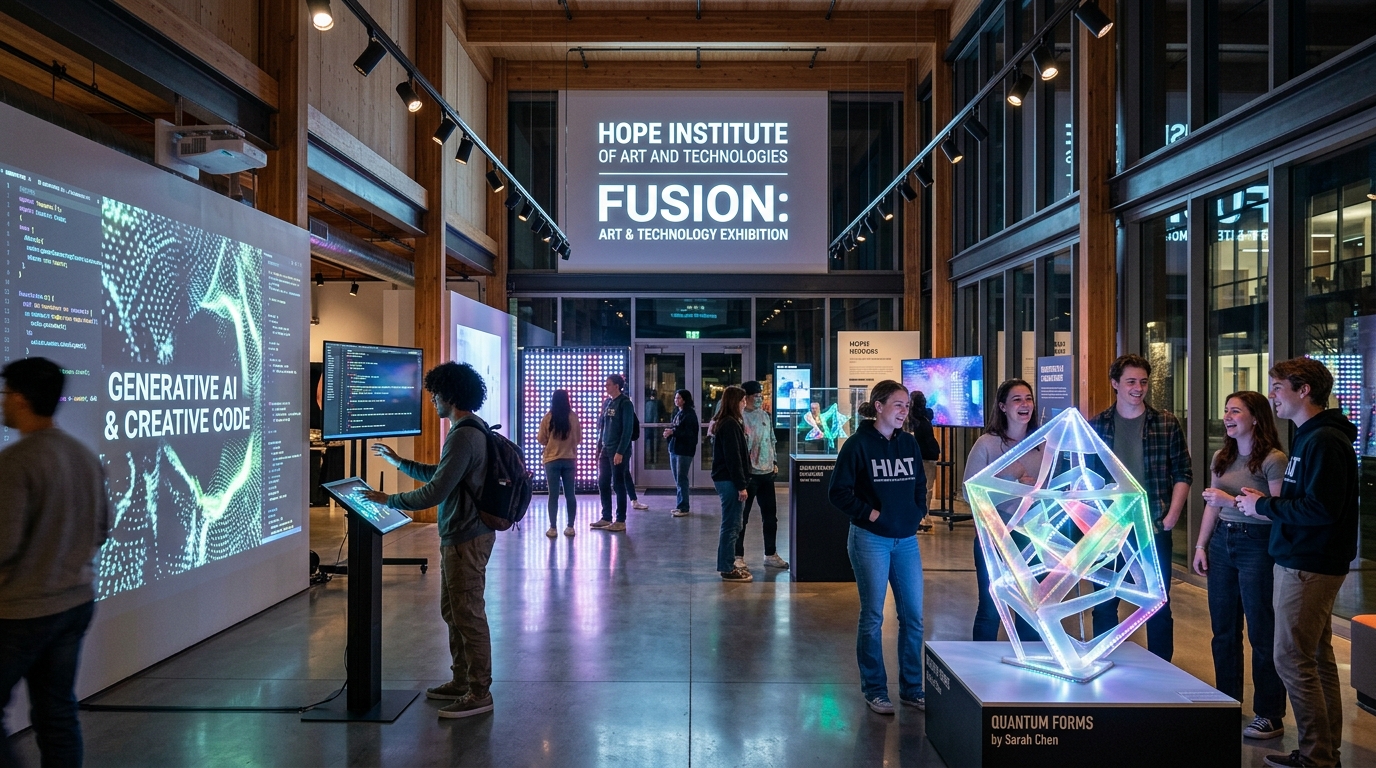
The future of technology is not merely functional; it is deeply visual, emotional, and interactive. As artificial intelligence automates routine coding and basic asset generation, the most valuable technology professionals will be those who possess both visual artistry and technical engineering prowess. At Hope Institute of Art and Technologies, we call this vision Canvas to Code—a unified academic approach that bridges creative expression with digital innovation.
1. Breaking Down the Silos Between Art and Engineering
Historically, educational institutions forced students to choose between two isolated tracks: the fine arts academy or the technical engineering university. This artificial separation created visual designers who struggled with technical feasibility, and software developers who built functionally sound applications that lacked aesthetic polish and user delight.
Hope Institute of Art and Technologies was founded specifically to eliminate this partition. Our interdisciplinary studio labs bring together artists, software engineers, UX researchers, and 3D animators under one roof. Students learn to speak both languages fluently—understanding both color theory and computational logic, typography hierarchy and memory optimization.
2. The Philosophy of Creative Coding and Generative Art
One of the exciting frontiers taught in our interdisciplinary laboratories is Creative Coding. Using languages like Processing, p5.js, Three.js, and GLSL shaders, students write algorithmic code to produce dynamic, generative visual art and interactive installations.
Creative coding teaches developers to treat code as a malleable artistic medium. Instead of viewing algorithms strictly through a utilitarian lens, students learn how mathematical equations, trigonometric functions, and particle physics can create breathtaking web animations, kinetic typography, and immersive virtual environments.
Key Benefits of Interdisciplinary Learning at Hope Institute
- Holistic Problem Solving: Approaching complex digital challenges with both analytical structure and artistic empathy.
- Enhanced Cross-Functional Collaboration: Communicating seamlessly across product managers, visual designers, and backend engineering teams.
- Competitive Market Distinction: Standing out in global job markets by offering dual-threat skills in visual design and software development.
- Rapid Prototyping Capability: Conceptualizing visual ideas and immediately building functioning code prototypes independently.
3. Real-World Impact: Highlighting Student Innovations
Each year at our annual Art & Tech Fusion Exhibition, Hope Institute students showcase capstone projects that demonstrate this powerful synergy. Past exhibitions have featured interactive digital art galleries powered by real-time computer vision, educational mobile apps using gamified 3D animations, and web accessibility tools that transform visual data into audio soundscapes.
"When you give an artist the power of code, or a coder the eye of an artist, you don't just get better software—you get inspiring digital experiences that push human culture forward." — Academic Dean, Hope Institute
4. The Role of Artificial Intelligence in Creative Technology
As generative artificial intelligence tools evolve, some artists express concern about automation. At Hope Institute, we view AI not as a replacement for human creativity, but as an empowering co-creator. Our curriculum teaches students how to harness AI models for rapid ideation, mood boarding, and code boilerplate generation while maintaining complete creative direction and artistic integrity.
Students learn how to write custom scripts to fine-tune AI models on their own original artwork, ensuring that technology serves human artistic expression rather than homogenizing visual culture.
5. Hardware Studios & Interactive Exhibition Spaces
To support interdisciplinary experimentation, Hope Institute of Art and Technologies provides dedicated Maker Spaces equipped with physical computing kits (Arduino, Raspberry Pi), projection mapping projectors, spatial audio systems, and virtual reality headsets (Meta Quest, HTC Vive). Students test their creative software installations in physical space, gaining insights into physical human-computer interaction.
6. Building VR/AR Immersive Environments with Unity and Unreal Engine
Extended Reality (XR) is redefining visual storytelling in gaming, medical training, and architectural simulation. Hope Institute interdisciplinary teams collaborate on building high-fidelity VR and AR environments. Artists create optimized 3D assets, while coders program interactive spatial physics and natural hand-gesture tracking interfaces.
7. The History & Pioneers of Creative Algorithmic Art
To deepen historical awareness, our creative coding curriculum explores the legacy of digital art pioneers like Vera Molnár, Manfred Mohr, and John Maeda. Students study how early computer artists used plotter machines and mainframe code to explore geometry, randomness, and visual rhythm—connecting historical computer art with modern WebGL shaders and procedural generative systems.
8. Ethical Considerations in Algorithmic Art & Copyright in Digital Media
With the rise of generative art models and digital asset marketplaces (NFTs, Web3 galleries), understanding digital rights management and copyright ethics is crucial. Hope Institute incorporates legal and ethical seminars into the interdisciplinary curriculum, guiding creators on licensing, intellectual property rights, and fair use in digital art production.
9. Community Outreach & Digital Tech Workshops for High School Aspirants
Hope Institute of Art and Technologies believes in nurturing future creative talent early. We host weekend creative coding bootcamps, high school digital art competitions, and open campus workshops where young aspiring artists and coders experience the power of art-tech fusion firsthand under the guidance of our faculty and senior students.
10. Industry Partnerships and Collaborative Studio Grants
Hope Institute actively collaborates with leading creative agencies, software vendors, and entertainment studios. Our industry partnership program funds student-led research grants in emerging fields such as real-time spatial audio rendering, volumetric video capture, and accessible user interface design for neurodiverse individuals. These real-world studio grants allow students to solve meaningful industry problems before graduation.
11. Career Pathways in the Future Creative Economy
As virtual reality, augmented reality, spatial computing, and real-time 3D web engines continue to proliferate, industries are hungrily seeking professionals who embody the Canvas to Code philosophy. Hope Institute alumni are thriving in modern hybrid roles including Creative Technologists, Front-End UI Engineers, Technical Artists, and Interactive Exhibition Designers.
12. Why Global Employers Hire Hope Institute Graduates
Recruiters from leading software enterprises, design studios, and gaming companies consistently highlight the unique adaptability of Hope Institute graduates. Having trained in collaborative, project-based environments, our alumni possess the technical depth to build robust software systems alongside the visual sensibility to deliver world-class user experiences.
13. Become a Dual-Threat Creator at Hope Institute
If you refuse to choose between your creative artistic passion and your passion for technology, Hope Institute of Art and Technologies is your ideal academic home. Discover our interdisciplinary degree programs, meet our distinguished faculty, and take the first step toward crafting the future of digital art and technology.
