
Mastering Modern Web Development and AI Integration: A Comprehensive Roadmap for Students
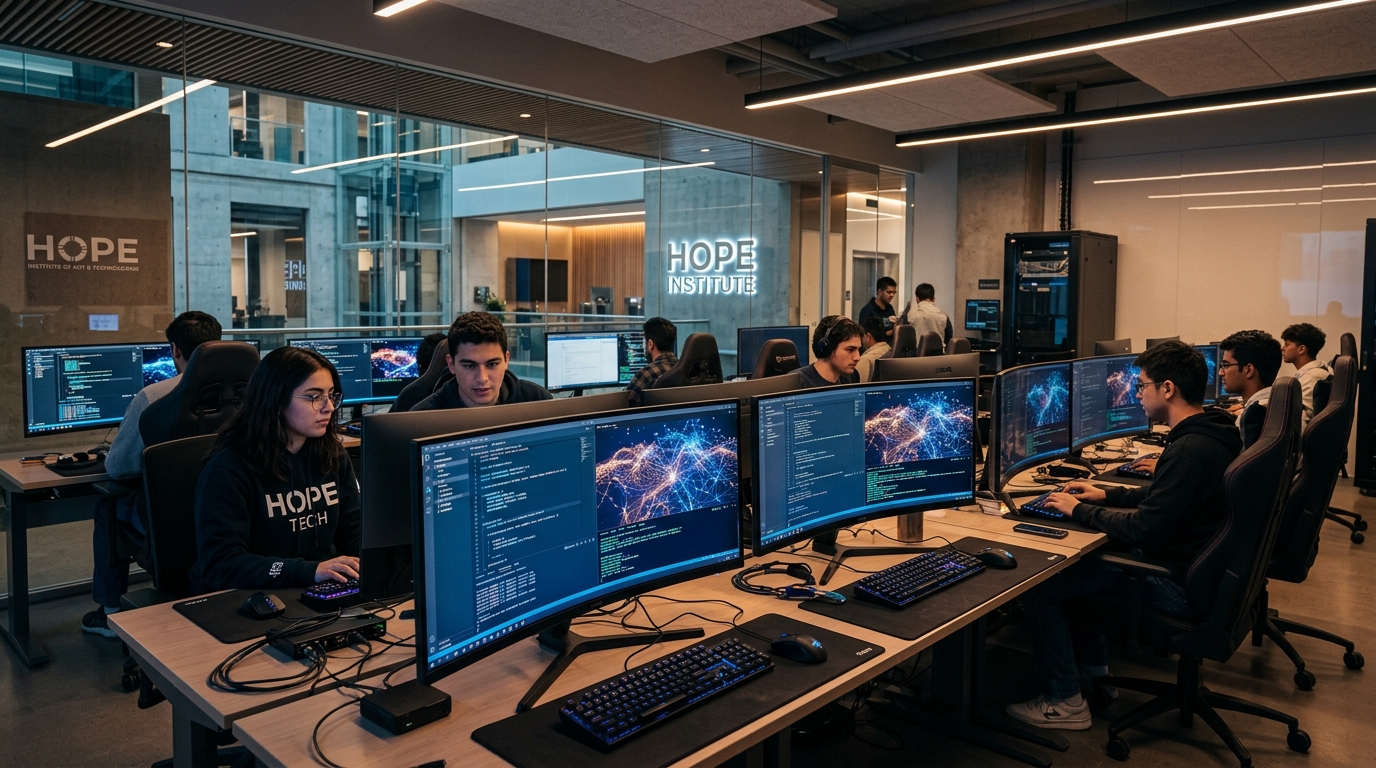
The software landscape is evolving at an unprecedented velocity. Modern web developers are no longer required to build static web pages; they are tasked with engineering intelligent, scalable web applications powered by artificial intelligence, real-time data streams, and robust security protocols. At Hope Institute of Art and Technologies, our web engineering and software curriculum equips students with the exact skills required to excel in this modern paradigm.
1. The Evolving Paradigm of Full-Stack Web Development
Over the last decade, full-stack development has shifted from basic client-side scripting and relational database management to modular, cloud-native application development. Developers today must navigate client-side user experience, server-side business logic, microservices, containerization, and API integrations with machine learning endpoints.
At Hope Institute of Art and Technologies, our curriculum emphasizes a solid foundation in computer science fundamentals paired with practical execution. We teach students how to analyze performance bottlenecks, optimize database indexing, design secure database schemas, and write maintainable, clean code following Object-Oriented Programming (OOP) and functional programming standards.
2. Phase 1: Core Fundamentals & Modern Web Standards
Before introducing complex frameworks and cloud deployments, students at Hope Institute build deep competency in semantic HTML5, advanced CSS layout systems (Flexbox and Grid), and vanilla JavaScript (ES6+). Understanding event loops, promises, asynchronous execution, and DOM manipulation gives developers the problem-solving depth needed when debugging complex application states.
Key Foundations Taught at Hope Institute
- Semantic Structure & Accessibility (a11y): Ensuring applications are accessible to all users using WCAG 2.2 standards and proper ARIA attributes.
- Responsive Layout Engineering: Designing fluid, mobile-first interfaces using custom CSS properties and responsive breakpoints without reliance on bulky third-party UI framework bloat.
- Asynchronous Data Processing: Utilizing Fetch API, WebSockets, and Async/Await patterns to handle dynamic data flows gracefully.
- Client-Side State Management: Controlling data persistence across single-page applications and server-rendered components.
3. Phase 2: Server-Side Architecture and Relational Databases
A resilient user interface depends on a performant, reliable backend. Hope Institute students train extensively on server-side architecture using Node.js, PHP 8+, Python, and Express. They construct RESTful APIs and GraphQL services, implement authentication mechanisms (OAuth2, JWT, Session Security), and prevent common vulnerabilities such as SQL injection and Cross-Site Scripting (XSS).
Database mastery is equally critical. Students design relational schemas using SQLite, PostgreSQL, and MySQL, alongside document databases like MongoDB. Exercises include optimizing slow queries, managing transactions, setting up foreign key cascades, and building automated data migrations.
"Building software is not just about writing code that runs—it is about designing resilient systems that scale gracefully under pressure while delivering real value to human beings." — Lead Engineering Instructor, Hope Institute
4. Phase 3: Practical Integration of Artificial Intelligence (AI)
Artificial Intelligence has transformed from a futuristic luxury into an essential building block for contemporary web platforms. Hope Institute of Art and Technologies integrates AI engineering directly into the core web curriculum. Students learn how to connect application backends to Large Language Models (LLMs), machine learning APIs, and computer vision models.
Through practical lab exercises, students build practical AI applications including:
- Intelligent Content Summarizers & Agents: Utilizing LLM APIs to generate dynamic summaries, automated tagging, and natural language search filters.
- Predictive Analytics Dashboards: Integrating machine learning models to forecast data trends for e-commerce and financial platforms.
- Automated Code Quality & Security Scanners: Utilizing AI tooling to detect potential code smells, unused dependencies, and security risks in continuous integration pipelines.
5. Phase 4: Web Performance Optimization & Core Web Vitals
Page speed directly impacts user retention, search engine rankings (SEO), and business conversion rates. At Hope Institute, web performance is treated as a primary engineering metric. Students learn how to analyze performance using Google Lighthouse and Chrome DevTools.
Optimization strategies taught in our advanced engineering lab include:
- Critical Rendering Path Optimization: Minimizing render-blocking JavaScript and CSS to achieve sub-second First Contentful Paint (FCP).
- Media Asset Compression: Automatically converting images to modern WebP and AVIF formats, implementing responsive srcset images, and lazy loading below-the-fold media.
- Caching & CDN Strategies: Implementing HTTP cache-control headers, service worker offline caching (PWA), and Content Delivery Network edge caching.
6. Phase 5: DevOps, CI/CD, and Production Deployment
Writing code on a local machine is only half the battle. At Hope Institute, every project concludes with automated testing and deployment to cloud infrastructure. Students learn Git version control workflows, containerizing applications with Docker, setting up Continuous Integration and Deployment (CI/CD) pipelines on GitHub Actions, and configuring web servers (Nginx/Apache) with HTTPS certificates.
7. Software Engineering Best Practices & Testing Frameworks
Professional software engineering demands disciplined testing and code quality assurance. Students at Hope Institute learn Unit Testing, Integration Testing, and End-to-End (E2E) automation testing using frameworks like PHPUnit, Jest, and Playwright. Writing testable code, enforcing strict typing, and conducting peer code reviews are built directly into every project assignment.
8. Deep Dive into Microservices vs. Monolithic Architecture
As applications scale to serve millions of requests, choosing the right system architecture becomes paramount. At Hope Institute of Art and Technologies, students analyze the trade-offs between monolithic builds and distributed microservices. They learn how to split application domains into decoupled services, communicate via event-driven message brokers like RabbitMQ and Apache Kafka, and manage database per service patterns effectively.
9. Security Engineering & Defense Against Web Threats
Cybersecurity is integrated into every layer of software development at Hope Institute. Students practice defensive programming techniques to mitigate the OWASP Top 10 vulnerabilities. Key security topics include implementing strict Cross-Origin Resource Sharing (CORS) rules, sanitizing user inputs to prevent XSS attacks, enforcing CSRF tokens, and hashing credentials using Argon2 and bcrypt algorithms.
10. Real-World Student Project Showcase
To demonstrate industry readiness, senior software engineering students complete a multi-week capstone build. Recent student projects include a real-time collaborative code editor with AI assistance, an automated supply chain management dashboard, and a lightweight headless CMS platform optimized for sub-100ms response times.
11. Industry Hiring Trends and Career Opportunities
Graduates of our web development and AI program enter the technology industry with versatile skills that command high industry demand. Alumni pathways include Full-Stack Web Engineers, Backend API Developers, DevOps Engineers, and AI Solutions Integrators. Organizations value Hope Institute graduates for their ability to deliver clean, scalable, and secure production code from day one.
12. Take the Next Step in Software Engineering at Hope Institute
If you are ready to master full-stack web engineering, database architecture, and artificial intelligence integration, explore our comprehensive academic programs at Hope Institute of Art and Technologies. Join an institution dedicated to your technical growth, innovation, and long-term career success.
