
Digital Marketing by ZenteCode.com: Complete Guide
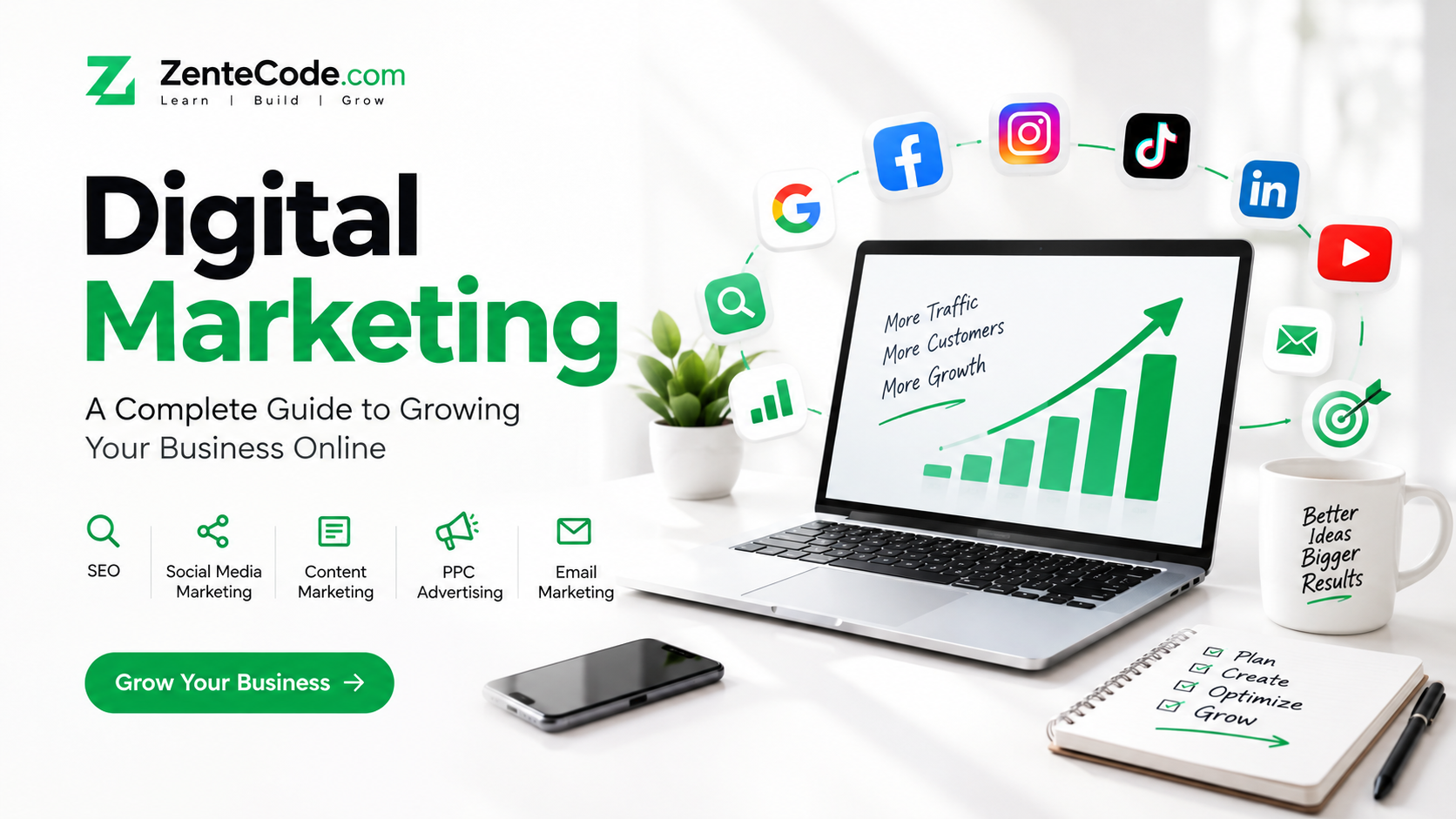
Digital Marketing by ZenteCode.com: A Complete Guide to Growing Your Business Online
Introduction to Digital Marketing
Digital marketing has become an essential part of modern business. As more people use the internet to search for products, services, and information, businesses need an effective online presence to reach their target audiences. From small startups to established companies, digital marketing helps brands increase visibility, attract potential customers, and build long-term relationships.
ZenteCode.com can be presented as a digital-focused brand that helps businesses understand the importance of online growth, technology, and digital strategies. By using the right marketing techniques, businesses can improve their online reach, strengthen their brand identity, and compete more effectively in the digital marketplace.
In this article, we will explore what digital marketing is, its major types, its benefits, and how businesses can use effective digital marketing strategies to achieve their goals.
What Is Digital Marketing?
Digital marketing is the process of promoting products, services, or brands through online channels and digital technologies. These channels include search engines, websites, social media platforms, email, and online advertising networks.
Unlike traditional marketing methods, such as newspapers, billboards, and television advertisements, digital marketing allows businesses to connect with specific audiences and measure campaign performance using data.
For example, a business can use search engine optimization to appear in Google search results, social media marketing to engage with followers, and email marketing to communicate directly with customers.
Digital marketing is flexible and suitable for businesses of different sizes. With a clear strategy, even a small business can establish a professional online presence and reach customers beyond its local market.
Major Types of Digital Marketing
1. Search Engine Optimization (SEO)
Search engine optimization, commonly known as SEO, helps websites improve their visibility in organic search engine results. When people search for information related to a business, effective SEO practices can help relevant pages appear more prominently.
SEO includes keyword research, high-quality content creation, technical improvements, internal linking, and website performance optimization.
For example, a website like ZenteCode.com can publish useful articles about technology, website development, and digital marketing to attract readers searching for these topics.
SEO usually requires patience because rankings can take time to improve. However, consistent optimization and helpful content can contribute to sustainable website traffic over time.
2. Social Media Marketing
Social media marketing involves promoting a brand through platforms such as Facebook, Instagram, TikTok, LinkedIn, and YouTube.
Businesses use these platforms to share educational posts, product updates, videos, customer stories, and promotional content. Social media also provides opportunities to answer questions, receive feedback, and build relationships with audiences.
An effective social media strategy starts with selecting the platforms most relevant to the target audience. Businesses should publish consistently, use engaging visuals, and communicate in a style that matches their brand.
Rather than focusing only on follower counts, companies should measure meaningful results such as engagement, website visits, inquiries, and conversions.
3. Content Marketing
Content marketing focuses on creating and distributing valuable information to attract and retain a clearly defined audience.
Common content formats include blog articles, tutorials, videos, infographics, case studies, and downloadable guides.
For example, ZenteCode.com could publish practical articles explaining SEO techniques, website design principles, digital tools, and online business strategies. Such content can help readers solve problems while building trust in the brand.
Successful content marketing is not simply about publishing large numbers of articles. It requires understanding what readers need and providing accurate, original, and useful information.
4. Pay-Per-Click Advertising (PPC)
Pay-per-click advertising allows businesses to display paid advertisements on search engines and other digital platforms. Advertisers generally pay when someone clicks on an advertisement.
Google Ads and social media advertising platforms offer options for targeting audiences according to factors such as interests, search intent, location, and demographics.
PPC can help businesses reach potential customers quickly, especially when launching a new product or promoting a time-sensitive offer.
However, campaigns should be carefully managed. Businesses need to set budgets, choose relevant keywords, create persuasive advertisements, and monitor conversions to avoid wasting advertising money.
5. Email Marketing
Email marketing allows businesses to communicate directly with subscribers through newsletters, updates, offers, and educational messages.
It can be an effective way to maintain relationships with existing customers and encourage repeat purchases.
A successful email marketing campaign should provide genuine value instead of sending unnecessary promotional messages. Businesses should obtain appropriate consent, respect privacy, and include clear unsubscribe options.
Personalized content and relevant offers can improve engagement when they are based on legitimate customer preferences and behavior.
6. Website Design and Conversion Optimization
A professional website is an important foundation for digital marketing. Visitors should be able to understand a business's services, navigate its pages easily, and find the information they need.
A well-designed website should load quickly, work smoothly on mobile devices, use readable typography, and provide clear calls to action.
Conversion optimization involves improving a website so that more visitors complete meaningful actions, such as submitting a contact form, subscribing to a newsletter, or purchasing a product.
For a digital brand such as ZenteCode.com, combining useful content with a clean and responsive website design can support a more professional user experience.
Benefits of Digital Marketing for Businesses
Digital marketing offers several advantages over relying exclusively on traditional promotional methods.
Wider audience reach: Businesses can connect with people across different cities and countries through websites and online platforms.
Cost flexibility: Many digital marketing activities can begin with relatively small budgets, although results depend on the strategy, competition, and resources available.
Measurable performance: Analytics tools help marketers evaluate website traffic, audience engagement, advertising costs, and conversions.
Targeted campaigns: Businesses can create campaigns for audiences with relevant interests, needs, or purchasing intentions.
Improved customer relationships: Social media, email newsletters, and helpful website content allow businesses to communicate with customers consistently.
Long-term growth opportunities: Strong website content, organic search visibility, and customer loyalty can support sustainable business development.
These benefits are most effective when digital marketing activities are coordinated around clear business objectives.
How to Create an Effective Digital Marketing Strategy
A successful digital marketing strategy begins with understanding the business and its audience. The following steps provide a practical starting point.
Step 1: Define Your Goals
Identify what you want to achieve. Your objectives might include increasing website traffic, generating leads, improving brand awareness, or increasing sales. Set measurable targets and realistic deadlines.
Step 2: Understand Your Target Audience
Research the problems, interests, and needs of your potential customers. Understanding your audience helps you create relevant content and select the most appropriate marketing channels.
Step 3: Research Keywords and Competitors
Use keyword research tools to discover the phrases people search for online. Review competing websites to identify content gaps and opportunities, but create original material that provides additional value.
Step 4: Build a Strong Website
Ensure your website is secure, mobile-friendly, easy to navigate, and optimized for performance. Create clear service pages, useful articles, and contact information.
Step 5: Publish Valuable Content Consistently
Develop a content calendar that includes blog posts, social media updates, videos, and other useful resources. Prioritize quality, accuracy, originality, and audience needs.
Step 6: Track Results and Improve
Monitor important metrics, including organic traffic, click-through rates, leads, conversion rates, and customer acquisition costs. Use these insights to improve underperforming campaigns and invest more effectively in successful activities.
Common Digital Marketing Mistakes to Avoid
Businesses sometimes expect immediate results from every marketing activity. However, organic SEO and brand building often require sustained effort.
Other common mistakes include targeting overly broad keywords, publishing low-quality content, ignoring mobile users, purchasing fake followers, and running paid advertisements without tracking conversions.
Another mistake is copying competitors instead of developing a distinctive brand voice. Businesses should focus on their audience, communicate honestly, and regularly review their marketing performance.
Avoiding these problems can help organizations use their time and resources more effectively.
The Future of Digital Marketing
Digital marketing continues to evolve as technology and customer expectations change. Artificial intelligence, marketing automation, personalized experiences, short-form video, and data-driven decision-making are influencing how businesses communicate with their audiences.
AI tools can assist with brainstorming, research, content planning, and customer support. Nevertheless, human review remains important for accuracy, originality, privacy, and quality.
Businesses that combine modern technology with genuine customer understanding will be better positioned to adapt to changing online trends.
Conclusion
Digital marketing is a valuable tool for businesses that want to increase online visibility, attract customers, and build a recognizable brand. SEO, social media marketing, content creation, PPC advertising, email campaigns, and website optimization each play an important role in a comprehensive digital strategy.
For readers exploring digital growth through ZenteCode.com, the key is to focus on useful information, professional website experiences, and measurable marketing goals. Start with a clear plan, understand your audience, publish valuable content, and improve your approach based on real results.
With consistency, careful planning, and a commitment to quality, digital marketing can help businesses strengthen their online presence and create opportunities for long-term growth.
About ZenteCode.com: Explore the website for its published resources, services, and information about technology and digital growth. Verify any specific service offerings directly on the website before relying on them.